Showing posts with label tea 101. Show all posts
Thursday, March 26, 2020
Tea Activities To Do At Home
It's been a tough few weeks, and I know many people have it far worse. Living in the middle of a huge COVID-19 outbreak in NYC has been tough, but my family and I are trying to take it one day at a time. Sometimes one minute at a time when even a day becomes too much.
Blogging has been tough lately as I'm working from home while making sure my family is healthy and safe. But I thought it would be helpful to put together a few tea-related things to do if you are staying at home as much as possible.
Support Small Tea Vendors
Independent tea vendors need our help now more than ever. Brick and Mortar stores have had to close, but most places are doing online sales. Pick your favorite vendors and either purchase tea, teaware or gift cards if you don't need any products right now. There are so many places to choose from. I will work on a post highlighting a few vendors soon. If you have a favorite vendor, let me know in the comments of this post and I'll include it when I write about them.
Host A Virtual Tea Gathering
It's important to stay connected to our friends, and taking some time to raise a cup with a few is a great way to connect. You can use programs such as zoom, houseparty, google hangouts or facebook messenger hangouts to get together. I'd love to set up a few hangouts so let me know if you're interested.
Take Some Tea Outside
For those of us that are able to get out of the house and walk through a park or other outdoor space, try to take your tea outside. Or even just have tea on a fire escape, balcony, or by an open window. All you need is a thermos of hot water, a brewing vessel and a cup. I've been trying to do this as much as possible, and it has helped tremendously. Feeling the crisp fresh air, listening to birds, and sipping tea while staying socially distant.
Try A Tea Meditation
I recently wrote a post about doing your own tea meditation. Just take a few minutes for yourself and really focus on your tea. No matter how you do it, give yourself a little bit of time to completely unplug from the world. I promise it'll help.
Dig Deep Into Your Tea Stash
I'm sure most of us have a sizeable tea stash at home. This is the perfect time to go through it and try some teas you've forgotten about. Or maybe teas you were saving for a rainy day. Those expensive samples? Break them out! Why not treat yourself!
Share Your Tea Knowledge
If you live with family, teach them a little bit about tea. Host a little family tea tasting. Or host a zoom session with friends who may be curious about tea. Sharing what you know is a great way to interact.
Create Tea Pairings
You know I'm all about tea pairings. It's fun to get creative and see what flavors work together, and what doesn't. Get some snacks, maybe cook or bake a few things, and get pairing! You can read a little bit about tea pairing 101 here and here.
Use All Your Teaware
Let's admit it, we all collect teaware. If you're like me you've got your favorite pieces and those that usually get left behind. It's time to dust off the things haven't used in ages. You may just find you have a new favorite that's been lurking in your cabinet, waiting for its time to shine.
Create With Tea
Do something creative with your tea. I mentioned tea pairings earlier, but you can also take tasting notes, write a tea-inspired story, paint with tea, or take photos of your tea. I look forward to my Instagram sessions, and my Tween Tea Critic has been joining me most days. I love to see what my fellow Instagrammers are doing!
Find A New Tea Book
I have a library of tea-related books, and I haven't opened every single one. When I'm ready to focus I'll probably crack a new one open and get reading. There are endless tea books out there, and even tea-focused stories. In that future post I mentioned, I'll also be listing tea books to read. Feel free to suggest your own in the comments and I'll include them.
Accept That You Won't Be Productive
Finally, please note this post is a list of things you can do, but it's not a list of things you must do. Accept that these are difficult times, and we can't focus and accomplish things the way we did before. Yes, we're at home, but that doesn't mean it's easy to get things done. We're all stressed, anxious, and distracted. Let's find ways to try and make things enjoyable, but it's not important to write a novel, become a tea scholar, or even clean the whole house. Just do what you can to get through the day.
So what ideas have I missed? I'd love it if you shared some of your tea-themed stay-at-home entertainment tips!
Thursday, February 20, 2020
How To Do Your Own Tea Meditation Any Time Of Day
Tea Meditation- Stay In The Moment
First, it's important to point out that no matter what you do, staying in the moment is key. I personally look at it as a moment for myself, and nothing else. It doesn't need to be anything greater than this!
I've been slowly reading the book Every Day a Good Day by Noriko Morishita which is about the author's 25 year journey of learning chanoyu (the Japanese way of tea), and how it has shaped her life. One of the main things she learned is to always stay in the moment, and fully experience.
Morishita is constantly reminded by her sensei "When you sit in front of the kettle you have to be in front of the kettle...pour your heart and soul into each and every movement". We can bring this concept to our own tea meditation, no matter how casual. If you're having tea, even if it's just pouring hot water into a mug with a teabag, you can slow down, and be present while it steeps.
Tea Meditation- The Setup
As I mentioned before, you don't need any special tools. Whether you have a full gongfu set up or just a mug and some hot water, go with it. The main thing is to pause your day and try to focus on your moment. This isn't time to multitask, or take tasting notes. Just be with your tea!
If you can find a quiet place, great! If not, go with what you've got. Maybe you're in a cubicle in a large office or a similarly noisy environment. If you have headphones, I'd suggest using them. If not, just try to be in the moment and breathe (and try to ignore Janet from accounting).
A Sample Tea Meditation
As I mentioned, it's important to go with what you've got. Maybe you don't even have a few minutes for a full tea meditation. I often pause in the middle of a workday for just enough time to grab some hot water and steep my tea. I'll use the precious seconds while my tea is steeping to breathe, enjoy the tea's aroma, and clear my mind. Even if it's brief, give it a try.
If you can spare a few more moments, here is a sample tea meditation that you can use as a guide and tailor to you own needs. The key is to do everything mindfully. Be aware, focus, and try to clear your mind of everything else (if you can- and if you can't, just acknowledge how you are feeling).
If you have a hot water kettle, let's start there. While you are heating the water, take a listen. What do you hear around you? Can you focus on the different sounds the water makes as it starts to get warmer? Can you slow your breathing while you wait for the kettle to boil?
If you are near a window, maybe take a few moments to observe. What's the weather like? How does it make you feel? Can you hear anything outside? If you're in a crowded area, it's important to still stay in the present. Focus on where you are, and the act of making tea.
When you add your leaves (or tea bag) to your vessel, take a moment to observe. How do the leaves look? Smell? Feel? You can take your time with this, or simply give it a quick glance, whatever time allows.
Add your water to the leaves and observe with all your senses. Enjoy the aromas and warmth of the vessel. Observe the tea and how the colors and aroma change while it steeps.
When it's time to taste, observe the flavors and aromas and how they make you feel. Enjoy the warmth (or refreshing cold, if you have an icy brew). Do the flavors remind you of anything? Particular foods or past experiences?
All of this can take a few seconds, or much longer, depending on what you can spare.
Tea Meditation- Take a moment to reflect
Once I've taken a few sips, observed, and perhaps taken a few slow breaths, I like to focus a moment on gratitude for the tea. Thankfulness to all aspects of tea- from the plant, to the earth, to the people growing, plucking, processing, shipping, etc. You can of course show gratitude for whatever you like. Or don't... like I said, do whatever works for you in your tea moment.
Tea Meditation-Go Easy On Yourself
To be honest, I'm awful at meditation. I have a hard time clearing my mind and sitting still. But I find that through a tea meditation I can briefly calm my nerves, stop the world, and focus on mindfulness. I don't approach it as zen meditation or connecting with a higher universe. It's just to give time back to myself. And fully enjoy a good cup of tea. It's a time to be with yourself, and push the world out of your mind for a few moments.
Morishita is constantly reminded by her sensei "When you sit in front of the kettle you have to be in front of the kettle...pour your heart and soul into each and every movement". We can bring this concept to our own tea meditation, no matter how casual. If you're having tea, even if it's just pouring hot water into a mug with a teabag, you can slow down, and be present while it steeps.
Tea Meditation- The Setup
As I mentioned before, you don't need any special tools. Whether you have a full gongfu set up or just a mug and some hot water, go with it. The main thing is to pause your day and try to focus on your moment. This isn't time to multitask, or take tasting notes. Just be with your tea!
If you can find a quiet place, great! If not, go with what you've got. Maybe you're in a cubicle in a large office or a similarly noisy environment. If you have headphones, I'd suggest using them. If not, just try to be in the moment and breathe (and try to ignore Janet from accounting).
A Sample Tea Meditation
As I mentioned, it's important to go with what you've got. Maybe you don't even have a few minutes for a full tea meditation. I often pause in the middle of a workday for just enough time to grab some hot water and steep my tea. I'll use the precious seconds while my tea is steeping to breathe, enjoy the tea's aroma, and clear my mind. Even if it's brief, give it a try.
If you can spare a few more moments, here is a sample tea meditation that you can use as a guide and tailor to you own needs. The key is to do everything mindfully. Be aware, focus, and try to clear your mind of everything else (if you can- and if you can't, just acknowledge how you are feeling).
If you have a hot water kettle, let's start there. While you are heating the water, take a listen. What do you hear around you? Can you focus on the different sounds the water makes as it starts to get warmer? Can you slow your breathing while you wait for the kettle to boil?
If you are near a window, maybe take a few moments to observe. What's the weather like? How does it make you feel? Can you hear anything outside? If you're in a crowded area, it's important to still stay in the present. Focus on where you are, and the act of making tea.
When you add your leaves (or tea bag) to your vessel, take a moment to observe. How do the leaves look? Smell? Feel? You can take your time with this, or simply give it a quick glance, whatever time allows.
Add your water to the leaves and observe with all your senses. Enjoy the aromas and warmth of the vessel. Observe the tea and how the colors and aroma change while it steeps.
When it's time to taste, observe the flavors and aromas and how they make you feel. Enjoy the warmth (or refreshing cold, if you have an icy brew). Do the flavors remind you of anything? Particular foods or past experiences?
All of this can take a few seconds, or much longer, depending on what you can spare.
Tea Meditation- Take a moment to reflect
Once I've taken a few sips, observed, and perhaps taken a few slow breaths, I like to focus a moment on gratitude for the tea. Thankfulness to all aspects of tea- from the plant, to the earth, to the people growing, plucking, processing, shipping, etc. You can of course show gratitude for whatever you like. Or don't... like I said, do whatever works for you in your tea moment.
Tea Meditation-Go Easy On Yourself
To be honest, I'm awful at meditation. I have a hard time clearing my mind and sitting still. But I find that through a tea meditation I can briefly calm my nerves, stop the world, and focus on mindfulness. I don't approach it as zen meditation or connecting with a higher universe. It's just to give time back to myself. And fully enjoy a good cup of tea. It's a time to be with yourself, and push the world out of your mind for a few moments.
Thursday, May 2, 2019
Getting Kids Interested In Tea
I've written a little bit about teaching kids about tea through tea parties, and as I watched my 9 year old son sip on a cup of chamomile tea, I realized I should post another article in this series. Kids are naturally curious about everything, and it's never too early to start teaching them about tea. There are so many interactive things they can get involved with to start forming a relationship with the leaf.
Tasting Tea
If the children are old enough to hold a cup independently, you can let them taste! Due to the caffeine I can't really promote giving them camellia sinensis to taste (but I admittedly give my kids sips of pure tea), but there are so many other things they can taste that will encourage their love of tea.
Herbal tisanes are perfect for kids. You can pick things that are fruity, sweet, and floral. Even if a tisane isn't naturally sweet, adding a little honey or other sweetener of choice is totally fine. I'd recommend having them try the brew without sweetener as well, so they can get an idea of what the infusion really tastes like.
The tasting process is really a lesson in mindfulness. The kids get to clear their mind, and focus on the flavors. Ask them what they are tasting, what it reminds them of, and how it makes them feel. You'll be amazed at the words they use to describe the brew. Children have a unique and unbiased perspective.
To get them even more involved, consider growing your own herbs that are great for teas. The kids can help your herbs and flowers grow, pick them when ready, and learn how to brew the tea. This is a great way to get your kids involved in the entire seed to cup process! Herbs such as mint, lemon verbena, and lemongrass are easy to grow and make great tea, and there are so many others.
Learning About Tea Rituals
Once children are a little older (around 1st grade), it's fun to teach them about tea rituals. Cultural tea practices such as gongfu cha, british afternoon tea service, and Japanese chanoyu are just a few ways of combining social studies with tea. I've done a few classes at my daughter's school on tea rituals around the world, and the kids are always fascinated. I love how many hands go in the air when I ask questions!
Let's take the Chinese gongfu tea preparation as an example. To get my kids started with gongfu preparation, I explained a little bit about the process and history, and we watched a few brewing videos on YouTube.
![]() |
| whole dried chamomile flowers in the gaiwan |
The most exciting (and frustrating) part is learning how to use a gaiwan. To find a tisane for my children to try brewing in a gaiwan, I looked for something with fairly large pieces. I wanted to prevent too many bits escaping into the sharing pitcher and creating more frustration. Many large leaf herbs would work, but I settled on whole chamomile flowers, since they are fun to look at and taste sweet. The large size of the flowers are easier to keep in the gaiwan and out of the sharing pitcher.
Teaching the gongfu tea method to my son turned out to have a second benefit, which is dexterity. My son has issues with motor skills, and learning how to hold and pour a gaiwan has been a fun way to get him to use his hands. I selected a small gaiwan that holds about 60ml. It's inexpensive and easy for a small hand to hold.
As you can see from the first photo in this post, I started the practice by having my son place his hand on top of mine, to get a feel for the movement of holding and pouring a gaiwan. He's still not pouring independently, but he loves the process and he's learning yet another important skill, patience.
These are just a few ways to get your kids more interested in tea. Whatever ways you choose to, it'll be a rewarding experience for everyone involved. You'll open their minds to new flavors and experiences, and they get to learn about different cultures. They'll even learn a little bit about themselves along the way.
Thursday, March 14, 2019
Why Does This Tea Taste Bad?
The other night I had yet another bad tea experience at a restaurant, and it inspired me to write this post. The tea in question should have been vegetal and lovely, and instead I had something bitter and too astringent. Thankfully I knew the tea wasn't bad, it was just prepared incorrectly.
It doesn't matter if you're preparing the tea yourself, or if you're at a 4-star restaurant; if a tea is prepared incorrectly, it won't be at its best. So why does your tea taste bad? Important factors such as the amount of leaf, steeping time, temperature, and quality will greatly change the flavor of your tea.
Water Quality Can Change The Flavor
I'm lucky to live in the NYC area, and our tap water tastes great! It really does. I usually use filtered tap water for my tea. But when I travel to visit relatives upstate, I cannot use tap water to brew my tea, filtered or not. It tastes awful! So consider your tap water, and if that could be altering the taste. I'd suggest trying filtered tap water first, and also experimenting with bottled water to see if the flavor of your tea changes. If you'd like to read a little more about how water changes the flavor of tea, check out this great post by Rie from TeaCurious.
The Water Temperature
This seems to play a role in many restaurants. It's so important to tailor the temperature of the water to type of tea you're making. A delicate green tea isn't going to react well to boiling water, and a strong black tea may taste bland with water that's not hot enough. I've noticed most restaurants don't take the time to control water temperature. For example, when the water is too hot, green tea basically gets scorched and the tea turns bitter. You'll miss all the amazing flavors that a lower temperature can coax out of the leaves. Be sure to consult the packaging of your tea, it'll most likely indicate the temperature you should be using. Or a quick online search will tell you what you need to do.
The Water To Tea Ratio
This is another culprit of bad restaurant tea. I've been served pots of tea with an infuser filled to the top with leaves. In most cases, if you use too much tea and not enough water you're going to get a puckering, astringent, undrinkable brew. And of course, if you aren't using enough tea in a huge pot of water, you won't get much flavor. It also depends on your brewing style, but for Western brewing (in a teapot or mug with an infuser), be sure to consult the packaging. A typical ratio is usually a teaspoon of tea to a cup of water, but that's not an exact science and it greatly depends on the leaves.
The Steep Time
I'm guilty of over-steeping my tea most days when I'm at work. I'll start a steep, and proceed to check emails, get distracted, you know the deal. I really should be setting a timer (I use the timer on my phone) to remind myself. Over or under-steeping a tea will cause the flavor to be too strong, or obviously too mild and both will negate any nuances in the tea.
Are You Using A Tea bag?
Ok, first off, I'm not saying tea bags are bad. They're not! There are many good ones on the market, with quality tea inside. But many tea bags are just tea dust or very low quality leaves, which renders the brew unpleasant and flavorless. Another issue is the taste of the tea bag itself- you can easily be getting paper or even plastic notes in your tea. Definitely not tasty.
The Tea Itself
It's possible you're also using tea that is quite old and wasn't stored properly so it's turned stale. That'll make your tea taste, well, stale. Or perhaps you stored the tea next to something quite odiferous, and it's taken on the less-than-pleasant smell. Tea also varies greatly in quality so I'd suggest trying other brands of the same tea type, you may find one you like better. Doing just a little bit of research about a tea will help you determine if you have something you don't like, or just a poor version of it.
Useful Tools for Better Tasting Tea
So, now you have the knowledge, but maybe you need a few things to get started. A variable electric kettle is a great way to control the temperature of the water. I've owned this one in the past, and it works really well. I also love this one. I've been drooling over this one for months (what, doesn't everyone drool over electric kettles??), and hope to acquire it at some point!
A pitcher with a water filter is a handy way to improve the flavor of your tea.
To measure your tea, you can use a teaspoon, but to be even more precise, a small kitchen scale is essential. I mainly only use mine when I'm tasting a tea for review or trying one for the first time, but if you use it you'll get the right amount of tea every time.
For Western-style brewing, be sure to have a teapot with a mesh strainer so you can remove the leaves at the proper time. There are hundreds to choose from but I love these cute little teapots, they are great for home or office steeping.
So, what do you think? Don't dismiss a particular tea (or all teas!) just because you didn't like it the first time. Of course it's possible it's just not for you, but give tea a chance, and make sure all of these important variables are correct. Chances are you'll have a much better cup of tea. There are so many types to try, so don't give up!
Thursday, February 21, 2019
A Lesson In Pairing Tea, Wine, and Food at Baccarat Hotel
I recently had the pleasure of attending an exquisite tea, wine, and food pairing event at the Baccarat Hotel in NYC. I picked up tips for pairing tea with champagne and food in the most beautiful room, while sipping on the most delicious tea, champagne, and food. Sounds like a dream, right? It was quite an evening.
This incredible event was created by Gabrielle Jammal, the incomparable tea sommelier at Baccarat. Over the past year she has been working tirelessly to create tea events in this luxurious yet intimate setting, to show guests the true magic of tea. So, on to the magic...
Thursday, July 12, 2018
World Tea Expo 2018: Tea Pairing Workshop with Virginia Utermohlen Lovelace M.D.
![]() |
| Virginia Utermohlen Lovelace |
One of the most memorable experiences I had at World Tea Expo this year was attending the workshop "Learn To Pair Teas & Build Menus from Scratch" with Virginia Utermohlen Lovelace, M.D. Virginia uses science to explain the art of pairing tea and food, and she is an expert instructor. I love pairing tea and food, as you can tell from the Tea Pairing 101 series I've been doing with Jee and Georgia. Our approach is a bit subjective, as taste is very personal. Actually, if you peruse Virginia's blog, you will see that she takes each of our pairing sessions and explains our findings with science! Virginia's workshop also brought this fascinating scientific approach to tea pairing, and I couldn't believe how useful the information is.
Flavors as Temperatures
The first thing we learned was how the chemicals in food activates our Trigeminal nerve temperature receptors. Basically, flavors we taste will be detected on a temperature scale! Thinking of flavors in terms of temperature is fascinating to me. We discussed words for how we detect the flavors. For example, spicy and peppery foods are on the hottest end of the temperature scale, then drop in temperature to sweet and umami flavors, then down to mellow and balanced foods, finally to cool and milky, refreshing, frozen, and pungent foods at the coolest end of the spectrum. It's important to consider the 'temperature' of the flavors in a dish when selecting a tea to pair it with. Think of a chili pepper vs. a cucumber. They are opposite on the temperature spectrum, and therefore will require a different tea pairing.
Flavors that are opposite on the temperature spectrum may not work well together, or they even can cancel each other out. Just as you can't feel hot and cool simultaneously, you cannot taste a 'hot' and a 'cold' food at the same time. To illustrate this point, Virginia had us put a cinnamon candy in our mouths for a few seconds to get the flavor, and then taste a mint. The minty flavor completely masked the cinnamon! You can't taste them both at the same time. The trigeminal receptors detected the cinnamon as hot, and the mint as cool. Hot receptors are slow to develop, but they linger. The cool receptors are much faster to turn on and off, so once the flavor of the mint candy dissipated, the cinnamon flavor came right back! It actually lingered for quite some time. If paired correctly, food will enhance the tea you are drinking, but if incorrect, flavors can be inhibited.
Tasting Teas
In order to further understand how teas fall on this temperature scale, we naturally had to taste a few! We tasted three teas from Yatra Tea, and one from the Great Mississippi Tea Company. Here's a brief rundown of the teas and the flavors we experienced:
Yatra Fatikcherry Estate Tripura Green Tea, Autumn 2017- Virginia asked for this tea to be a bit oversteeped, so we could taste the astringency. I noted this tea as 'moderate' in bitterness, astringency, and low in sweetness and other flavors. The best part came next- we were asked to taste the tea, and then taste a tiny bit of salt. When I tried this, I actually gasped out loud. The bitterness completely disappeared! I could now taste the floral and green notes of this tea. With the addition of salt it became a 'soothing' tea, flavors were fairly balanced and nothing was particularly dominant. This put the tea in the 'cool' to 'middle' temperature range. I am definitely going to remember how salt masked the bitterness and astringency. Pro tip: In my notes I wrote that both salty and vanilla flavors tame bitterness.
Yatra Goomtee Estate First Flush Darjeeling, April 2017- this tea also hit the 'middle' temperatures for me. It was not bitter or astringent, but delicate with sweet, nutty, and floral notes. Virginia pointed out that first flush Darjeelings are in a similar temperature level as oolongs, activating the 'medium-warm' trigeminal nerve receptors. This made sense to me, since they are both partially oxidized (just as there is a range of oxidation, there is also a range of medium temperatures).
Great Mississippi Tea Company Black Magnolia- I've had this tea before, and really enjoy it. My notes for this tea includes no bitterness, with moderate sweetness, and strong nuttiness. I circled both 'soothing' and 'hearty' on my rating sheet, as it's sort of in-between. It's not as 'hot' as an Assam; it's more delicate, but still on the hotter end of the temperature spectrum.
Pairing Teas
Snack time! After assessing the teas alone, we then paired them with a few different bites. We had blueberry, raisin, and chocolate scones, along with blueberry, strawberry, and raspberry jams. The variety of scones were important, as pairing tea and scones is a classic afternoon tea choice. But not all scones go with all teas! When creating a tea menu you need to decide what flavors you'd like to emphasize, and what flavors to dampen. Then you can start to figure out how to pair.
Here are some of the flavor highlights:
Green tea went really well with blueberry! The sweetness of the tea was enhanced, and the bitterness disappeared. The green flavors were also highlighted with the blueberry. So if you are selecting a scone to go with your green tea, go for blueberry if you can! The other teas didn't work as well with the blueberry. We learned that blueberries activate cold receptors just like green tea does.
Darjeeling tea worked well with the raisin scone, and also when the strawberry jam was added. This brought out the floral notes. Darjeeling activates the 'warm' receptors, as does the raisins and strawberries, so it makes sense that this pairing worked so well.
The best pairing for me was the Black Magnolia tea with the chocolate scone and raspberry jam. It was heavenly! Very balanced, floral, and rich. Why is this? Chocolate and raspberries activate the hot receptors, which is where the black tea falls on the temperature scale. Fascinating, right?
In the case of the tea and scones, if you activate both the 'hot' and 'cold' receptors at the same time (say pairing the green tea with chocolate), it clashes, and doesn't work at all. When building a tea and food menu, it's important to take these things into consideration. Of course, it's difficult to offer only certain teas with certain foods, but if you are armed with the temperature receptor information, you'll know how to choose your foods wisely, and create successful pairings. As a class, we decided that the best way to offer successful tea and food pairings is to have a 'tea tapas' restaurant where the diner can choose one tea and one small plate of food at a time. Quick, someone run with that idea!
As you can see, this workshop was an amazing experience. I cannot wait to put this knowledge to good use! A huge thank you to Virginia for letting me attend the workshop! I hope I can attend more of them in the future.
Pairing Teas
Snack time! After assessing the teas alone, we then paired them with a few different bites. We had blueberry, raisin, and chocolate scones, along with blueberry, strawberry, and raspberry jams. The variety of scones were important, as pairing tea and scones is a classic afternoon tea choice. But not all scones go with all teas! When creating a tea menu you need to decide what flavors you'd like to emphasize, and what flavors to dampen. Then you can start to figure out how to pair.
Here are some of the flavor highlights:
Green tea went really well with blueberry! The sweetness of the tea was enhanced, and the bitterness disappeared. The green flavors were also highlighted with the blueberry. So if you are selecting a scone to go with your green tea, go for blueberry if you can! The other teas didn't work as well with the blueberry. We learned that blueberries activate cold receptors just like green tea does.
Darjeeling tea worked well with the raisin scone, and also when the strawberry jam was added. This brought out the floral notes. Darjeeling activates the 'warm' receptors, as does the raisins and strawberries, so it makes sense that this pairing worked so well.
The best pairing for me was the Black Magnolia tea with the chocolate scone and raspberry jam. It was heavenly! Very balanced, floral, and rich. Why is this? Chocolate and raspberries activate the hot receptors, which is where the black tea falls on the temperature scale. Fascinating, right?
In the case of the tea and scones, if you activate both the 'hot' and 'cold' receptors at the same time (say pairing the green tea with chocolate), it clashes, and doesn't work at all. When building a tea and food menu, it's important to take these things into consideration. Of course, it's difficult to offer only certain teas with certain foods, but if you are armed with the temperature receptor information, you'll know how to choose your foods wisely, and create successful pairings. As a class, we decided that the best way to offer successful tea and food pairings is to have a 'tea tapas' restaurant where the diner can choose one tea and one small plate of food at a time. Quick, someone run with that idea!
As you can see, this workshop was an amazing experience. I cannot wait to put this knowledge to good use! A huge thank you to Virginia for letting me attend the workshop! I hope I can attend more of them in the future.
Wednesday, July 4, 2018
Shake It Up! How To Flash-Chill Your Tea
We're in the middle of a heat wave here in NYC, and iced tea has been on the menu for a few days. I usually have a cold-brew going in the fridge all summer long, but sometimes I get a craving for a particular tea iced and I don't have the patience to wait a few hours. That's where flash-chilling comes to the rescue! It's similar to brewing a tea hot at extra strength, and chilling it. But it's way more fun.
What You'll Need:
-Tea of your choice (either 1-2 large tea bags or 2 tbsp loose tea) and 10 ounces of water. I used Good & Proper Iced Hibiscus Tea With Rose Hip And Ginger for this post.
-Steeping vessel (I use a small teapot or even a large mug)
-Cocktail shaker or large durable jar with a tight-sealing lid (you will be shaking ice in there, so make sure it won't break)
-Ice
Step 1: brew about your tea as you normally would- I usually make it double strength, so about 2 tbsp of tea for 10 ounces of water. You don't want to put too much water in the cocktail shaker, as you want to fill it with lots of ice!
Step 2: Add 1 1/2 cup of ice to a cocktail shaker, and then pour in the tea.
Step 3: Shake! And Shake! And Shake! The more vigorously you shake, the more foam you'll create.
Step 4: Pour out the brew into a glass with some ice, making sure to get all of the foamy goodness. I've noticed it's easier to take off the entire top of the shaker to get all of the foam. Taking off just the little cap does not allow the foam to pour out as easily, at least with my cocktail shaker.
![]() |
| pouring with the cap on my shaker doesn't allow enough foam to come through |
Tips:
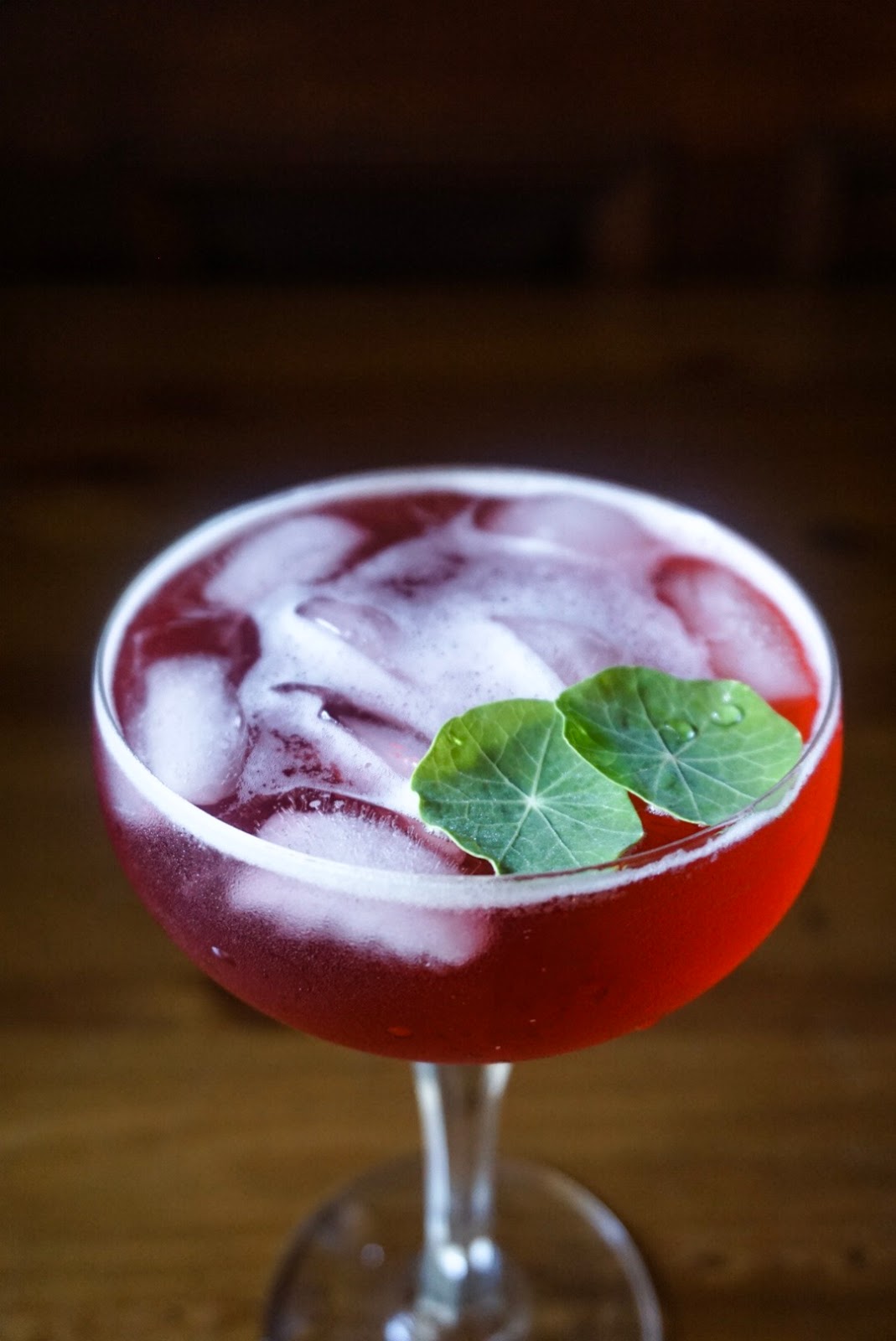
I like to pour my tea into either tall iced tea glasses, or champagne coupe glasses. The coupe just makes things look a bit classier, don't you think?
You can garnish with fruit or herbs. I like to actually use edible leaves and flowers for a more unique look. I grow nasturtiums in my garden and both the leaves and flowers are edible. You can plan them from seeds and they with start growing within a couple of weeks. Flash-chilling tea is also a great way to make a tea cocktail. Just add your booze of choice before you shake it up.
| hibiscus tea with nasturtium leaves |
That's it! So now you know how to create delicious, elegant looked flash-chilled teas. You can customize them in all sorts of ways, and are a great way to serve iced tea to a crowd. I'd love to know what combinations you come up with, please feel free to share either in the comments, or on Instagram.
Wednesday, May 30, 2018
Tea Pairing 101: Black Tea and Tea Sandwiches
![]() |
| That's me, steeping our first tea, capture by Jee |
I'm pleased to finally present the next Tea Pairing 101 installment. You may remember this is the series that fellow tea bloggers Jee, Georgia, and I have been working on. We take three variations of one type of tea, and pair them with a specific type of food. It's always a fun and delicious afternoon.
This time we focused on black tea. Black tea can be paired with a range of different things from savory to sweet. I almost always pick a black tea when I'm enjoying an afternoon tea spread (unless an oolong steals my heart), because it will usually pair well with a range of sweet and savory items. We decided to run with this idea and pair black teas with savory tea sandwiches, the type that you'd typically serve for afternoon tea.
Thursday, May 24, 2018
Tea History 101: What Is Smouch?
| Dong Ding Oolong leaves- the real thing, not sloe! |
Steeping tea during its infancy in Europe and the American colonies was akin to living in the Wild West- no rules. Tea wasn't checked for quality, no one had a reference for proper preparation, and you couldn't be sure what was really in your tea blend. To add to the disarray, tea was in high-demand, and counterfeits were widely created.
In the 18th and 19th centuries tea was bulked up with sneaky additives and used leaves were dried and resold. I hadn't given this too much thought until I came across a book during a family trip to Charleston. I leafed through Civil War Recipes: Receipts from the Pages of Godey's Lady's Book while waiting for my kids to pillage the gift shop in a historic fort. My eyes rested on a small section called "Economy of the Tea Table [1863]" where I read:
Thursday, April 12, 2018
A Visit To The Charleston Tea Plantation
When my husband suggested we visit Charleston, SC with our kids for spring break, there one was thing that instantly popped into my mind. Not the immaculate architecture, the historic sites, or the southern cooking. Naturally, the first thing I thought of was 'We need to visit the Charleston Tea Plantation!!'.
Thursday, March 22, 2018
Tea History 101: The Value of 18th Century Teaware
I love history, especially when it involves tea! I also love to share the tidbits I'm learning here on the blog. I recently had the pleasure of attending a seminar on tea etiquette by Bruce Richardson, who co-authored A Social History of Tea, one of my favorite books on Western tea history. Bruce gave an informative seminar on afternoon tea etiquette throughout history, and one photo he shared in particular struck me as interesting:
![]() |
| Family Of Three (c.1727) by Richard Collins. © Victoria and Albert Museum, London |
This is a painting of a family enjoying tea with beautiful tea accessories, and drinking from tea bowls! I didn't realize that it was common to sit with your tea and teaware for paintings in the 18th century. During his seminar, Mr. Richardson mentioned European families often put their most valuable possessions in their paintings, so it makes sense that teapots, teaware and tea bowls are often seen in them. Teaware in the 1700s was very expensive and difficult to acquire, therefore quite valuable to a family. The above painting is part of the Victoria and Albert Museum's collection in London, and per the V&As website:
When painting 'conversation pieces' (relaxed portraits of family groups or gatherings of friends), artists were expected not only to show their sitters in fine clothes, but would also be obliged to include valuable possessions, indicating their wealth and social status.
Eighteenth Century European tea drinkers such as the ones in the painting enjoyed tea from bowls, since that's how it was consumed in China and Japan (and still is today). European exporters simply purchased the tea ware in Japan and China and shipped it off to England. Commissions for specific designs and sizes came later, as did manufacture within Europe. The woman in the painting looks as if her pinky is 'up' but most likely she is extending her pinky to counterbalance the bowl, and also to keep her digits cool from the hot bowl. By the way, putting your 'pinky up' for afternoon tea is a definite myth! But more on 18th century tea bowls- handles were added later, per wikipedia:
Tea bowls in the Far East did not have handles, and the first European imitations, made at Meissen, were without handles, too. At the turn of the 19th century 'canns' of cylindrical form with handles became a fashionable alternative to bowl-shaped cups.
The pieces of tea ware available during this time were often shipped from China and Japan in mixed batches and most families did not have matching sets. They often purchased individual pieces one at a time. This was well before the large fancy European tea sets were available. European artisans started to reproducing teaware they saw from China in the early 1700s, but re-creating the delicate pieces was difficult and artisans didn't master the technique until the mid-eighteenth century. Companies such as Meissen mentioned in the quote above, started creating tea bowls and other teaware, and later produced cups with handles.
| An old Meissen demitasse cup from my collection, but this one has a handle! |
According to the book Steeped In History, Europeans required handles because they drank mostly black tea, which (as you know) is usually served at a higher temperature than green tea. The hot temperatures made it difficult to hold the delicate tea bowls. Just think about the woman in the painting above, trying to balance her hot tea bowl in her hand! The child in the photo is also holding her bowl quite precariously. When I use a gaiwan to prepare black tea such as dian hong, I do admit I have a hard time holding it because of the temperature. It makes sense handles were developed when black tea became the popular choice in England and much of Western Europe. If you have an antique European tea cup that doesn't have a handle, chances are it's quite old!
Have you come across Eighteenth Century European portraits that include teaware? Or the teaware itself? If so I'd love to hear more about what you've seen!
For more bits of tea history, check out my previous posts on such things as Americans sipped tea before the Brits, tea and the presidency, and tea and women's suffrage.
Wednesday, October 25, 2017
Tea Pairing 101: Oolong and Fruit
It's finally time for the next installment of Tea Pairing 101! This is the series Georgia, Jee, and I have been working diligently on, pairing interesting flavors together while making sure the ideas are easy to recreate at home.
This time around we decided to pair oolongs with fruit. We wanted to use seasonal fruits, and since it is early autumn we chose pears, plums, and persimmons. All three of these fruits have very different flavor profiles, but still paint a picture of early autumn. We decided to include fresh honeycomb on our fruit plate to enhance flavors and appearance. We discovered the honey was a smart addition, which I'll explain later.
We had the unique opportunity to have our pairing session in a super-swanky NYC apartment. Thanks to Lizzie at Compass, we spent the afternoon at 286 Spring Street, a dreamy penthouse filled with natural light, modern fixtures, and terraces for days. Quite an exclusive backdrop for enjoying tea and fruit.
It wasn't easy to pick just three oolongs to use for this pairing. If you're an oolong drinker you know there are many different styles to choose from, and they have a wide range in flavor. Oolongs are typically produced in China, and Taiwan, but you can find oolongs from other tea growing areas. Should we pick a region? Stick with similar oxidation levels? What about roasting? In the end we decided on three oolongs that are good examples of their style, and not difficult to find. The whole point is to enjoy the experience and not get stressed out about finding the most perfect thing.
As before, we took three teas and paired with three foods. We used 3 grams of tea steeped for 2 minutes each in professional tasting cups. We nibbled some fruit then sipped the tea to see how the two worked together.
Tea pairing Round 1: Bao Zhong
Our first tea was Wenshan Bao Zhong (2017) by Tillerman Tea. This is a lightly oxidized tea from Taiwan. Bao Zhong means 'wrapped style' which is the rolling style reflected in the slightly twisted leaves. Quick story: the first time I had a beautifully floral Bao Zhong, it was purchased by my husband for me on our second date! We went to a tea store that called it Pouchong, another way it may be referred to. I remember it being beautifully floral but also vegetal, and the tea from Tillerman also has these qualities.
Tea pairing Round 1: Bao Zhong
Our first tea was Wenshan Bao Zhong (2017) by Tillerman Tea. This is a lightly oxidized tea from Taiwan. Bao Zhong means 'wrapped style' which is the rolling style reflected in the slightly twisted leaves. Quick story: the first time I had a beautifully floral Bao Zhong, it was purchased by my husband for me on our second date! We went to a tea store that called it Pouchong, another way it may be referred to. I remember it being beautifully floral but also vegetal, and the tea from Tillerman also has these qualities.
The dry leaves have a dark military green color, with twisted inch-long leaves. The leaves have a needle-like shape. A floral aroma like a bouquet of fresh flowers emanates off of these leaves. After steeping the aroma is still floral, but vegetal notes are also sneaking in.
The tea has many layers of flavor. It's savory, creamy, and floral. We tasted steamed bok choy and creamed spinach. This is a smooth, medium bodied tea without a hint of bitterness. A tea I could drink all afternoon.
For the pairings, we had two options that could work. The pear was mild enough to accent the floral tea and also enhance the savory flavor. However, the pear didn't really add much to the experience. The plum turned out to be a better choice. Its sweetness worked well with the floral and savory notes, but didn't overpower the palate. The tart plum skin transformed the tea flavor, creating an interesting depth. The persimmon didn't work with this tea. The fruit was cloyingly sweet, and strangely the tea canceled out the flavor in the fruit. It was a peculiar experience, and not particularly appealing. The plum was the clear winner for me.
Tea Pairing Round 2: Tie Guan Yin
The Tie Guan Yin (TGY) we used is from NYC's T-Shop. This is a heavily roasted TGY which is how I prefer to drink it, and is also the more traditional way to process the tea. I'm sure most of you have also had the lighter version of TGY, which is more floral and aromatic.
The dry leaves are tightly rolled dark reddish brown pellets, which is characteristic for this type of tea. The leaves have an aroma of fresh walnuts and dried cherries, reminding me of lazy autumn picnics.
The wet leaves present a roasty aroma, filled with chicory and dry twigs. It feels similar to kukicha in the dominance of that twiggy roasted goodness. The tea's flavor consists of chocolate, roast, and that chicory. A tea that reminds me of falling leaves and crisp mornings.
Time for the fruit pairings. I was expecting the plum to work, mostly because it feels like an early fall fruit. My instinct wasn't correct. The plum didn't have much flavor when paired with this oolong. The tartness didn't combine with the roasty tea. The pear also didn't work well- it was just too bland for the tea. It didn't enhance, and it didn't compliment. The super-sweet persimmon actually worked beautifully with the tea. The cloying sweetness is rounded out by the earthy strength in the tea. The two contrasting flavors played off each other well, making a harmonious pairing. Winner!
![]() |
| Tea with a view of One World Trade Center |
Tea Pairing Round 3: Xiao Hong Pao (little red robe):
This tea is from Seven Cups. I'm sure you've heard of Big Red Robe (Da Hong Pao), the most famous Wuyi mountain oolong tea. Be sure to visit this page to learn about the processing of the Xiao Hong Pao. According to Seven Cups, the primary difference between Xiao Hong and Da Hong is in the special drying process that keeps the Xiao Hong from tasting too toasty. It allows for other flavors to come through, which is something we noticed more in the aroma than in the flavor of the tea.
The dry leaves are dark brown and quite beautiful- long, twisted, and varying in size. The leaves have a rich chocolate aroma. Very sweet, a little bit of roast, and something a bit syrupy. Lots going on with this tea.
After our infusion the wet leaves were still twisted, which made me think we could steep this tea many times before we really learn its secrets. The aroma of the wet leaves conjures up honey, dried fruit, and roasted butternut squash. Again, an autumn-appropriate tea! The brew tastes quite roasted with that chicory flavor we found in the TGY. It was a little bitter with a pleasing roundness and full body. I found this tea to be very comforting. It was interesting that the aroma was so sweet, but the tea itself was quite roasty. It's possible that we needed to play around with the temperature (we brewed the tea at 212º) and time, to get the brew just right.
For the fruit: The persimmon worked nicely to tame the bitterness, but it didn't do too much for me. I think the flavors were polar opposites (very roasted, and very sweet), and perhaps they were too far apart to truly be a pleasant balance. We had a strange experience with the pear- it seemed to erase the flavor of the tea, but then a moment later the tea lingered on the palate. Jee decided that the pear was similar to a palate cleanser, which was an interesting thought! The plum turned out to be our goldilocks- it created a nicely balanced flavor with the roasted tea. Sweet and tart worked well with the rich, roasted tea.
![]() |
| From left to right: Bao Zhong, TGY, XHP |
The Outcome: Sweetness and Seasons
One of the important things we learned in this pairing is that the level of sweetness really makes a difference. The semi-sweet plum paired very differently than cavity-inducing persimmon. Making sure the fruit is ripe and in-season is also key. Fruit that is at the peak of flavor will pair very differently than unripe, bland fruit. The texture also influences the way the flavors feel on the palate. Since the flavor and texture can be unpredictable, it's important to taste all of your fruit to make sure it's how you imagined it would be. Pairings don't need to be limited to flavor profiles (plums with a tea that reminds you of tart plum skin, for example), but consider seasons. Teas that are picked in the same season as the fruit are an interesting study, or try to intentionally contrast the seasons and see how it changes things up.
Epilogue: Honey Is a Super Power:
Remember the honey I mentioned earlier? Honey turned out to be a unifying factor on the fruit plate. The honey always linked the tea and fruit together, and seemed to enhance the flavors. So, if you are using fruit that's perhaps a little out of season or not ripe enough, adding a little honey will work wonders. The pairing doesn't work quite so well? Try adding a little drizzle of honey. I don't think honey should be relied on to make the pairings work, but it is certainly a delicious way to harmonize flavors.
Thursday, August 31, 2017
Tea Pairing 101: Green Tea and Mochi
Tea, sweets, and art. Add in a dash of fashion, and I'm one happy gal. What do all of these things have in common? I'm excited to present the next Tea Pairing 101 collaboration with Jee and Georgia! In this pairing we combined a few of my favorite things into an afternoon of green tea and mochi magic. Read on below to see how to pair green tea with a variety of flavors.
Thursday, June 15, 2017
Tea Pairing 101: White Tea And Cheese
When tea friends get together, ideas start flowing. We sip and talk about anything and everything, and of course conversation always comes back to tea. After one of our tea meet-ups, Georgia, Jee, and I decided to work on a special collaboration together. We wanted to combine our passion for tea and our love of food.
Wednesday, May 31, 2017
The Ritual of Turkish Tea
Tea is a beverage meant to be shared and enjoyed together. Sharing sips and conversation is the perfect way to spend a happy afternoon. Many cultures have a ritual of sharing tea, and I can't think of a better example than Turkish tea culture. Turks drink more tea per person than any other country. Tea is offered to guests as soon as they arrive, and tea houses and gardens are the social gathering hubs in even the smallest towns. I recently had the pleasure of learning all about how to make Turkish style tea. My son's best friend's mother Özen is Turkish, and she invited us over for an afternoon of tea, treats, and playtime. I got a first hand look at how to make tea the Turkish way, and what foods are traditionally paired with it.
![]() |
| Rize Tea |
Tea is a way of life in Turkey. Çay (tea, pronounced 'chai') is always in the house. As I mentioned, it is a necessity when guests arrive, an essential element of hospitality. Turkey is not only the top consumer of tea in the world, they also grow tea in Rize, an area on the eastern Black Sea coast. Turkey exports part of their tea production but they drink most of it themselves. The tea leaves are the CTC variety, and produce a strong, dark brew.
![]() |
| The çaydanlık |
There are a few steps to making Turkish tea, and you need the proper equipment. First, you need a special kettle called a çaydanlık (pictured above). It looks like two kettles stacked on top of each other (similar to a Samovar). The large bottom kettle is for boiling water, and the top is for steeping tea. You'll also need Turkish tea, and tulip-shaped glass teacups along with saucers. Little spoons are also a plus!
To make your tea, fill the bottom kettle with water, and put about 2 tablespoons of tea in the top kettle. Bring the water to a full boil and then turn off the heat.
Once the water is ready, slowly fill the top kettle (the one with the tea) with the water. Then refill the bottom pot with fresh water, replace on the stove along with the top kettle, and re-boil while the steeping happens. The tea should steep for 10-15 minutes. It'll be good and strong!
Pour tea into the glass cups, and leave room to dilute with the freshly boiled water. The tea is always quite strong, but the depth of the strength can be personalized. Just add as much or as little water to the cup as you like. Özen said the tea is supposed to be the shade of 'Rabbit's blood' which is a little gruesome, but a helpful reference. I guess I like my tea extra-bloody, since I'll take it as strong as I can get.
Sugar is usually served in cubes, but it doesn't have to be used. I added sugar to mine to get the full experience. The tea is strong, bitter, earthy, and sweet. I loved it and drank quite a few cups.
We enjoyed feta cheese and simit (a Turkish bread) with our tea (yes there were also sweet treats afterwards, as you can see in the photo). Bites of tangy, salty cheese combined with the chewy sesame flavor of the simit was the perfect accompaniment to the strong tea. It's very easy to get swept up in conversation and drink many, many, many cups of tea. I was definitely well fed and caffeinated after our jubilant afternoon!
I think I need to get a çaydanlık and some turkish tea. I love the ritual of preparing this tea and serving it to guests. It is also a satisfying morning or early afternoon sip! The culture of tea may seem different from place to place but it really is quite similar. It comes down to mindfully preparing and enjoying a beautiful beverage. Thank you so much to Özen for teaching me how to properly brew and serve Turkish tea! I am definitely hooked.
Subscribe to:
Posts (Atom)