Showing posts with label oolong. Show all posts

Thursday, March 15, 2018

Review: Global Tea Hut Tieguanyin 2017 Traditional Oolong

Tea reviews are fun to write, and give me the opportunity to share my tea tasting adventures with you. They can be helpful if you are mulling over what teas to buy, or looking for a particular brand or variety. Keep in mind that taste is subjective, and depending on how you prepare the tea and the water you use, you may have different results. I usually prepare the tea as instructed by the vendor, unless otherwise noted. If at first you're not happy with a tea, try adjusting your water temp, steep time, and amount of leaf. Keep experimenting and tasting!


I have to admit, I don't often reach for Tie Guan Yin. It's either too green and floral, or the roast isn't right for me. There are a few exceptions, and lately I've noticed more traditionally roasted Tie Guan Yin (TGY) popping up.

Today's tea is TGY is from Global Tea Hut. The weather has been cold and I'm reaching for many roasted, darker teas. Traditional Tie Guan Yin is definitely appropriate for this time of year. Global Tea Hut is an organization dedicated to spreading their love of tea around the world. They run a monthly subscription program that includes a tea magazine and a tin of tea every month.

I subscribed to Global Tea Hut for quite some time, but decided to end my subscription because I couldn't keep up with reading all the magazines and drinking all the tea. I still have a huge pile of tea and magazine from about a year ago to get through. Such tea blogger problems! I do recommend it if you are looking for a monthly tea subscription that is unique, and full of information. It's an interesting look at tea farmers, tea culture, history, and teaware. In each issue you can also meet members of 'The Hut' and learn about their tea journey.

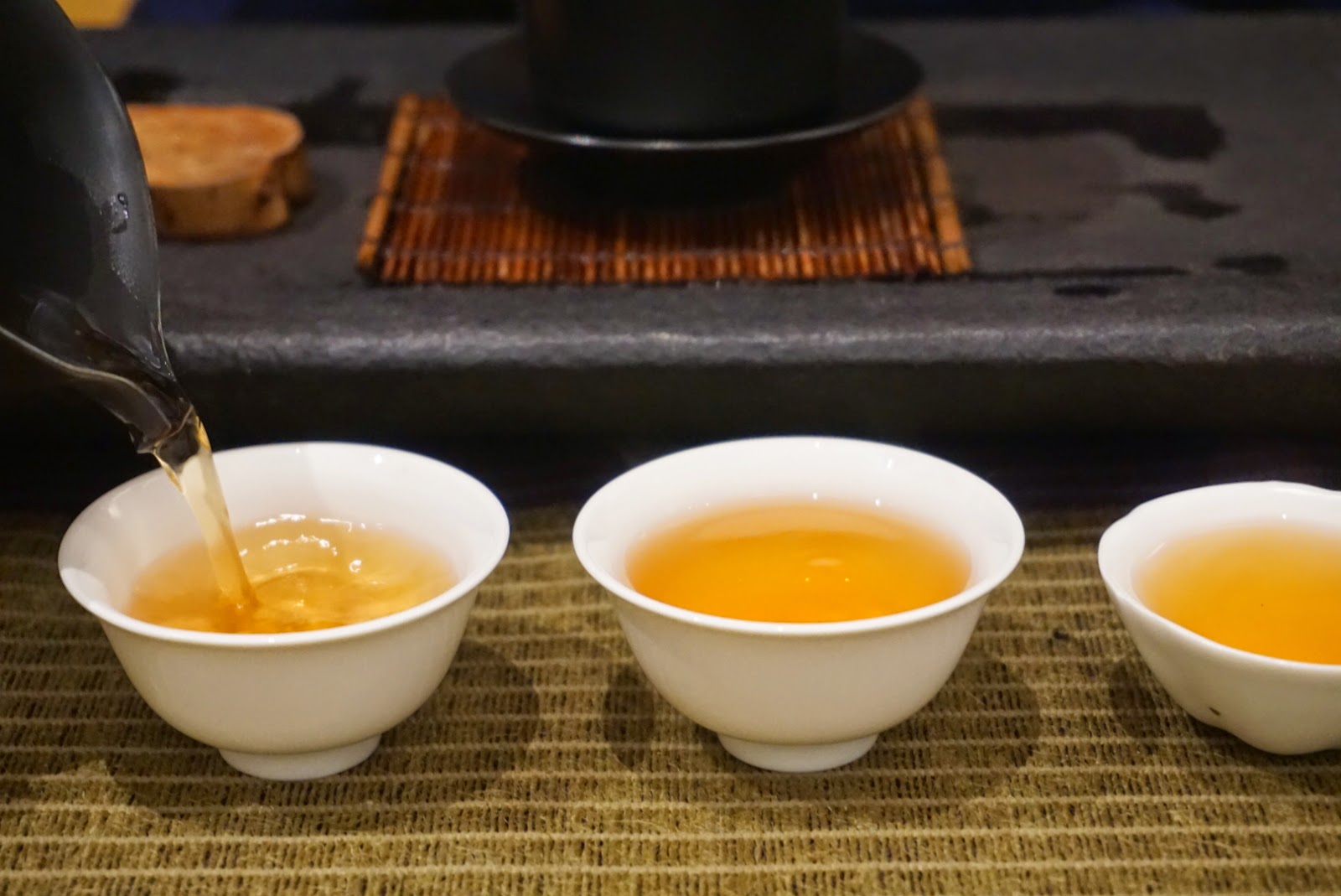
I was recently sent the January 2018 issue which is all about TGY. I was excited to try this version, and see where it fell in the 'too green' or 'too roasted' categories. I apologize that in my excitement I didn't take full notes, so I don't have a record on the aroma of the dry leaf. I prepared the sample in my small white porcelain gaiwan. My water temp was originally 200F, and it made a gentle, smooth brew. I prefer my traditional TGY with a little bit more bite, so I changed the temp to 212º F, and I got the more dynamic flavor I was looking for. It did have a little astringency at this temperature, but that's what I prefer. If you're looking for a clean and smooth flavor, go with 200º.


The brewed tea is roasty, with notes of toasted sourdough bread. After one sip I could see freshly baked sourdough bread, cooling on the kitchen counter. There is a hint of tartness within the toasted bread flavor, so my mind went to the sourdough. It also has a juicy flavor I've come to recognize with TGY.  I think it's similar to stewed apples. Flavor is clean, and the roast isn't too aggressive. It is nicely balanced. Definitely a nice version of a traditional TGY.

Thank you to Global Tea Hut for providing the magazine and sample! I enjoyed sipping and reading all the info in the magazine. I hope to subscribe again when I find myself with a little extra time for reading.

To see what fruit I'd pair with a roasted Tie Guan Yin, check out the Oolong and Fruit Tea Pairing 101 I did with my tea pairing friends last year. For a comprehensive look at the tea reviews I've done, you can check out this link, here.

Wednesday, October 25, 2017

Tea Pairing 101: Oolong and Fruit


It's finally time for the next installment of Tea Pairing 101! This is the series Georgia, Jee, and I have been working diligently on, pairing interesting flavors together while making sure the ideas are easy to recreate at home.

This time around we decided to pair oolongs with fruit. We wanted to use seasonal fruits, and since it is early autumn we chose pears, plums, and persimmons. All three of these fruits have very different flavor profiles, but still paint a picture of early autumn. We decided to include fresh honeycomb on our fruit plate to enhance flavors and appearance. We discovered the honey was a smart addition, which I'll explain later.

We had the unique opportunity to have our pairing session in a super-swanky NYC apartment. Thanks to Lizzie at Compass, we spent the afternoon at 286 Spring Street, a dreamy penthouse filled with natural light, modern fixtures, and terraces for days. Quite an exclusive backdrop for enjoying tea and fruit.

It wasn't easy to pick just three oolongs to use for this pairing. If you're an oolong drinker you know there are many different styles to choose from, and they have a wide range in flavor. Oolongs are typically produced in China, and Taiwan, but you can find oolongs from other tea growing areas. Should we pick a region? Stick with similar oxidation levels? What about roasting? In the end we decided on three oolongs that are good examples of their style, and not difficult to find. The whole point is to enjoy the experience and not get stressed out about finding the most perfect thing.

As before, we took three teas and paired with three foods. We used 3 grams of tea steeped for 2 minutes each in professional tasting cups. We nibbled some fruit then sipped the tea to see how the two worked together.


Tea pairing Round 1: Bao Zhong
Our first tea was Wenshan Bao Zhong (2017) by Tillerman Tea. This is a lightly oxidized tea from Taiwan. Bao Zhong means 'wrapped style' which is the rolling style reflected in the slightly twisted leaves. Quick story: the first time I had a beautifully floral Bao Zhong, it was purchased by my husband for me on our second date! We went to a tea store that called it Pouchong, another way it may be referred to. I remember it being beautifully floral but also vegetal, and the tea from Tillerman also has these qualities.

The dry leaves have a dark military green color, with twisted inch-long leaves. The leaves have a needle-like shape. A floral aroma like a bouquet of fresh flowers emanates off of these leaves.  After steeping the aroma is still floral, but vegetal notes are also sneaking in. 

The tea has many layers of flavor. It's savory, creamy, and floral. We tasted steamed bok choy and creamed spinach. This is a smooth, medium bodied tea without a hint of bitterness. A tea I could drink all afternoon.

For the pairings, we had two options that could work. The pear was mild enough to accent the floral tea and also enhance the savory flavor. However, the pear didn't really add much to the experience. The plum turned out to be a better choice. Its sweetness worked well with the floral and savory notes, but didn't overpower the palate. The tart plum skin transformed the tea flavor, creating an interesting depth. The persimmon didn't work with this tea. The fruit was cloyingly sweet, and strangely the tea canceled out the flavor in the fruit. It was a peculiar experience, and not particularly appealing. The plum was the clear winner for me.


Tea Pairing Round 2: Tie Guan Yin
The Tie Guan Yin (TGY) we used is from NYC's T-Shop. This is a  heavily roasted TGY which is how I prefer to drink it, and is also the more traditional way to process the tea. I'm sure most of you have also had the lighter version of TGY, which is more floral and aromatic.

The dry leaves are tightly rolled dark reddish brown pellets, which is characteristic for this type of tea. The leaves have an aroma of fresh walnuts and dried cherries, reminding me of lazy autumn picnics.

The wet leaves present a roasty aroma, filled with chicory and dry twigs. It feels similar to kukicha in the dominance of that twiggy roasted goodness. The tea's flavor consists of chocolate, roast, and that chicory. A tea that reminds me of falling leaves and crisp mornings.

Time for the fruit pairings. I was expecting the plum to work, mostly because it feels like an early fall fruit. My instinct wasn't correct. The plum didn't have much flavor when paired with this oolong. The tartness didn't combine with the roasty tea. The pear also didn't work well- it was just too bland for the tea. It didn't enhance, and it didn't compliment. The super-sweet persimmon actually worked beautifully with the tea. The cloying sweetness is rounded out by the earthy strength in the tea. The two contrasting flavors played off each other well, making a harmonious pairing. Winner!

Tea with a view of One World Trade Center

Tea Pairing Round 3: Xiao Hong Pao (little red robe):
This tea is from Seven Cups. I'm sure you've heard of Big Red Robe (Da Hong Pao), the most famous Wuyi mountain oolong tea. Be sure to visit this page to learn about the processing of the Xiao Hong Pao. According to Seven Cups, the primary difference between Xiao Hong and Da Hong is in the special drying process that keeps the Xiao Hong from tasting too toasty. It allows for other flavors to come through, which is something we noticed more in the aroma than in the flavor of the tea.

The dry leaves are dark brown and quite beautiful- long, twisted, and varying in size. The leaves have a rich chocolate aroma. Very sweet, a little bit of roast, and something a bit syrupy. Lots going on with this tea.

After our infusion the wet leaves were still twisted, which made me think we could steep this tea many times before we really learn its secrets. The aroma of the wet leaves conjures up honey, dried fruit, and roasted butternut squash. Again, an autumn-appropriate tea! The brew tastes quite roasted with that chicory flavor we found in the TGY. It was a little bitter with a pleasing roundness and full body. I found this tea to be very comforting. It was interesting that the aroma was so sweet, but the tea itself was quite roasty. It's possible that we needed to play around with the temperature (we brewed the tea at 212º) and time, to get the brew just right.

For the fruit: The persimmon worked nicely to tame the bitterness, but it didn't do too much for me. I think the flavors were polar opposites (very roasted, and very sweet), and perhaps they were too far apart to truly be a pleasant balance. We had a strange experience with the pear- it seemed to erase the flavor of the tea, but then a moment later the tea lingered on the palate. Jee decided that the pear was similar to a palate cleanser, which was an interesting thought! The plum turned out to be our goldilocks- it created a nicely balanced flavor with the roasted tea. Sweet and tart worked well with the rich, roasted tea.

From left to right: Bao Zhong, TGY, XHP

The Outcome: Sweetness and Seasons
One of the important things we learned in this pairing is that the level of sweetness really makes a difference. The semi-sweet plum paired very differently than cavity-inducing persimmon. Making sure the fruit is ripe and in-season is also key. Fruit that is at the peak of flavor will pair very differently than unripe, bland fruit. The texture also influences the way the flavors feel on the palate. Since the flavor and texture can be unpredictable, it's important to taste all of your fruit to make sure it's how you imagined it would be. Pairings don't need to be limited to flavor profiles (plums with a tea that reminds you of tart plum skin, for example), but consider seasons. Teas that are picked in the same season as the fruit are an interesting study, or try to intentionally contrast the seasons and see how it changes things up.


Epilogue: Honey Is a Super Power:
Remember the honey I mentioned earlier? Honey turned out to be a unifying factor on the fruit plate. The honey always linked the tea and fruit together, and seemed to enhance the flavors. So, if you are using fruit that's perhaps a little out of season or not ripe enough, adding a little honey will work wonders. The pairing doesn't work quite so well? Try adding a little drizzle of honey. I don't think honey should be relied on to make the pairings work, but it is certainly a delicious way to harmonize flavors.

It's also important to remember that there are no right or wrong answers here. If you prefer a different flavor combination, great! Go with what you like. I hope you enjoyed our swanky paring adventure, we certainly did! Don't forget to check out what Georgia and Jee had to say.

You can read about our last two previous pairings here and here. Stay tuned, we'll be brainstorming another Tea Pairing 101 soon.

Thursday, February 2, 2017

Steep Thoughts: David Campbell of Tillerman Tea

David Campbell of Tillerman Tea
I'm excited to bring back interviews to the blog, and I've decided to call them Steep Thoughts since we get to go behind the scenes and learn more about folks in the tea industry.This week I'm excited to present David Campbell and his company Tillerman Tea.  The company features beautiful Taiwanese teas from growers that are sustainable and environmentally friendly in their practices. Learn a little bit about David's experience and passion for tea in our interview.

Thursday, January 12, 2017

Tasting: Origins Tea Oriental Beauty


Oriental Beauty is a well known Taiwanese oolong. One of my favorite versions is served iced at Té company. It has a sweet honey-like flavor and the nuances hold up to the icing. Oriental Beauty is highly oxidized which brings out the sweet and fruity notes. The oxidation process actually starts right before it is harvested, when munchy little critters feast on the leaves.

I recently received a few teas from Origins Tea, a company that specializes in high quality tea from Taiwan. I'm honestly not sure why I decided to try the Oriental Beauty first, but it is a tea appropriate for the chilly weather. This tea is grown in the Emei township of Hsinchu county, which is in northwestern Taiwan. It was harvested in Summer 2015. The dry leaves are sweet, quite fruity. The fruit reminds me of sticky dried fruits like cherries and apricots. The leaves are a striking mix of colors which you can see above. Note the presence of the fuzzy white buds- this tea is also referred to as bai hao, which I believe translates to 'white tip'. 


the infused leaves
After a quick rinse the leaves exhaled a woodsy aroma with bits of dried twigs and leaves, along with those dried fruits I mentioned earlier. The woodsy notes remind me of kicking through piles of dried fall leaves. I was presented with images of a chilly day fall day and a warming cup of tea. As I mentioned, quite appropriate for the time of year. Although these days we're getting falling snow instead of leaves.

some of the white tips of the infused leaves

The first infusion had a fruity aroma with a soothing flavor. It was super smooth and woody, with that dried fruit (more apricot than cherry this time) and some added honey notes. It made me crave dried apricots for a snack! Serving a bowl of dried fruits and nuts with this tea might be a nice compliment. Subsequent steeps highlighted the honey, and the apricot was still present but more muted. The woodsy flavors hang around as well.

I served this tea to our Office Tea Club and everyone enjoyed it. It's a sweet pleasing brew, easy to drink and is quite full-bodied. The flavor lingers on the palate for ages. I love drinking full-bodied teas in the office-when I enjoy the tea then run to a meeting, the flavor stays with me. Comforting me through the fluorescent haze.


Thank you to Origins Tea for the sample! We all enjoyed it. Stay tuned for more reviews of their teas.

Friday, January 29, 2016

Review: Rosali Tea Box


I'm a born skeptic. My parents were both immigrants raised primarily in the Bronx and they rubbed their skepticism off on me. I question most things, especially those in business of selling. When I was first contacted to try a subscription box from Rosali Tea, I wasn't sure if this would be like so many other subscription boxes of generic teas without much information. But I started to doubt my skepticism once I saw the beautiful box with the three teas inside. Upon further inspection I knew this would be one of the exceptions to the norm.

Founder Rosa  has worked hard to source her teas and prides herself on the curated selection she sends to subscribers every month. There are three box options per month. For $14.95 you get 3 teas at 1oz each. That gets bumped up to 2 oz at $19.95 and 3 oz at $29.95. I like that you can choose your size. The teas come with disposable tea filters to make sure you have a way to brew your loose leaves. Each tea comes with a nice card with a description and brewing instructions.

The box is more of a drawer, with a lovely leaf design on the outside. I like it when vendors send reusable, useful packaging and this is definitely something I'll be reusing. But lovely packaging cannot tell you anything about the tea. So, here's what I tried:

Milk Oolong: I've had milk oolongs before with dubious origin. It's hard to know if the one you have is the real thing. I've been asking tea friends and doing some research and I've learned that if the scent is too overpowering, or you have a slight film on the top of your brew, you probably have a flavored oolong. The buttery flavor will dissipate after the first steep as well. It appears that the tea in this box is the real deal. This is Taiwanese oolong from the Jin Xuan cultivar, which is what you should look for if you want the good stuff. The dry leaves are buttery, creamy, and sweet. It reminded me of vanilla buttercream frosting, but with a slight greenness to it, if that makes any sense. My first two steeps were very buttery, and reminded me of movie popcorn, which isn't really a bad thing. I tasted a sweetness and mellow floral flavor as well but the buttery and cream notes dominated. By the 3rd infusion there was less buttery flavor and texture, but it was definitely still in the background. The sweetness and floral flavor was more present, getting more of a light oolong characteristic. I think I'm not a fan of the milky flavor in general, but I do appreciate the complexity of this tea. This week Rosali is selling it separately for anyone that is interested in purchasing just this tea.


Hibiscus Orange Nectar: I'm not too keen on rooibos in general, I'm just not a fan of the aftertaste I get from it. But the dry leaves smelled like an orange creamcicle, so I was a bit intrigued. I knew just who to share this tea with, The Littlest Tea Critic. Ingredients are rooibos, orange, hibiscus, rosehips, apple, rose, vanilla, and citrus flavor. The nostalgic creamcicle flavor was also quite strong in the brewed tea. I do think vanilla works well with the natural rooibos flavor, and the hibiscus and orange masked a bit of the aftertaste I don't usually care for. It really tasted like a creamcicle to me, mostly from the juicy orange and smooth vanilla. The Littlest Tea Critic and I both enjoyed our sips, but we agreed that this isn't a tea we'd drink every day. She's just like her mom, she's not a big fan of flavored teas. But if you grew up eating creamcicles, this is a fun treat to have! The flavors also taste clean, without any chemical aftertaste.


Sencha Matcha Bliss: Now this tea, is more my style. This beautifully vibrant, sunny green tea perked up my afternoon. The dry leaves are pure vegetal sweetness like sugar snap peas. The brew is delicate, grassy and sweet. I get a hint of savory umami as well, especially as it cools. This is a light and refreshing tea and even though it has a good amount of caffeine, I couldn't resist having a small cup in the late afternoon. I felt a burst of sunshine on my face even though it was an overcast day. A soul satisfying cup, for sure.

So in the growing space of tea subscription boxes, Rosali Tea is one to try. Thank you to Rosa for this beautiful box. I wish her all the best with her new subscription service! If each month has teas as interesting as these, she'll do quite well indeed.


Thursday, February 19, 2015

Visit: T-Shop


On one of the coldest days of the year Jee and I decided to venture out to T-Shop, a recent addition to NYCs growing tea scene. It was so cold, even walking a few blocks from the subway felt like traversing a snowy tundra. I was frozen to the bone but once through the door at T-Shop I felt an immediate calm. The serene, minimal room is focused solely on tea. You are here to take a tea adventure, and learn quite a bit along the way. Our trip was the right decision.


 T-Shop's owner Theresa is a peaceful presence, and guided us through our tea journey with grace and knowledge. Tasting Table has a nice little piece on Theresa, which you can read here. We asked her to recommend the tea, and started with a high mountain black. She chose this tea for us because it has a warming quality perfect for the season.


Her tranquil preparation of the tea in a simple gaiwan was meditative to watch. The tea was perfect for our occasion. Earthy and malty but with a sweetness that creeps up on you. After a few rounds of this tea, I felt as if I was glowing from the inside. My body had a comforting warmth as if I were wrapped in cashmere blankets sitting in front of a crackly fire. Theresa carefully laid out the beautiful leaves for us to admire. I silently thanked them for giving us so many flavorful steepings.


We enjoyed the first tea so much, we knew another selection was necessary. How could we leave such an oasis of peace when the angry wind awaited us outside? Theresa suggested the charcoal roasted  cui feng oolong after our warming black tea tasting.


Theresa told us the charcoal roasting of this tea created more complex flavors. The tea was sweet, yet toasty, floral, and a bit tangy. Lots of umami on the palate. The roasted flavor from the charcoal was layered within the others, and did not dominate. Such a nice contrast to the first tea. This is a tea I could drink all year round. Soothing and surprising in the winter, refreshing in warmer months. I was a bit tea drunk and forgot to pick up some leaves to take home. I'll definitely be back for some.


We were lost in an afternoon of tea fueled conversation, the weather dissolving into distant memory. I can't wait to return to T-Shop and go on a new tea exploration. I'm so thankful Theresa decided to share such a special place with the world.

T-Shop: 247 Elizabeth Street (rear store), NY, NY.